
History of Jatra Pala in Bengal
Tale of a traditional art
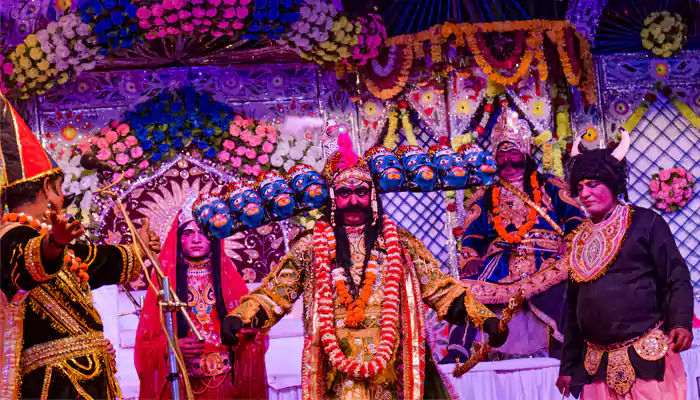
‘Yatra’, pronounced in Bengali as ‘Jatra’ , refers to ‘journey’. A traditional drama form in Bengal, where the group of the artists perform in different places travelling from one to another is called ‘Jatrapala’. The key feature of the performance is its length which might range from ten hours to even a week. Mostly popular and encouraged in rural Bengal, the Jatrapala requires a group of artists, extremely energetic and enthusiastic that they can keep their performance perfect for a long time. It’s not a joke to perform a drama for 5-6 days continuously in torrid and humid weather.
The History: Root Of The Form
The history of Jatra Pala is very unique, relating the art with the general rural people directly, for almost 500 years. It originated from Vaishnavism, a part of the Bhakti movement during the mediaeval era in India and has gone through several transformations and evolutions throughout centuries.
Beginning of Jatra Pala
During its days of inception, the ‘Palas’ (plays) were mostly based on religious concepts and beliefs, along with a moralistic and ethical tone. It was used as a medium of spreading the religion and such beliefs, encouraging the stories and incidents described in ancient Hindu religious literature. As time has passed, the content of ‘Jatrapala’ has been changed from its religious agenda to the more contemporary and impactful social and political agenda. The aim of the Jatra was also changed from its religious preaching to entertaining the people.
Pick Time For Jatra Pala
During the middle of the nineteenth century, as the renaissance in Bengal took place, the Jatrapala started coming into the mainstream, and thus, in urban culture also. The neo-riches of the then Calcutta often called ‘Babus’ started to form ‘JatraDals’ for the amusement of the then aristocrats of the Calcutta.
Jatra Lost Its Popularity
The popularity and acceptance of Jatra started to fall during the seventies of the nineteenth century, as the Western form of drama was introduced.
This was because the educated middle-class strata of Bengal, mostly based in Calcutta and nourished with their colonial lord’s western art, culture and aesthetics were the cultural authorities of that society, who found Jatras indecorous and poor as a form of art. Since Jatras have neither the classical Sanskrit-literature drama-form nor the modern Western drama pattern. The counter campaigns against the Jatrapala started to eradicate it from the urban cultural context.
But the independence movement of India, along with the peasant movements against the then British rulers and Zamindars, started encouraging the rural and ancient art and cultural forms, which in turn rejuvenated Jatrapala in the early twentieth century.