
Space Exploration 2.0: The Next Frontier in Human Achievement
How does it feel to watch the Earth from outer space?
Throughout history, humanity's infatuation with space has produced outstanding accomplishments. Our goals rise even higher as we start a new research phase, Space Research 2.0.
In this article, we can learn about the astonishing advancements, groundbreaking missions and the potential for space exploration to redefine human achievement.
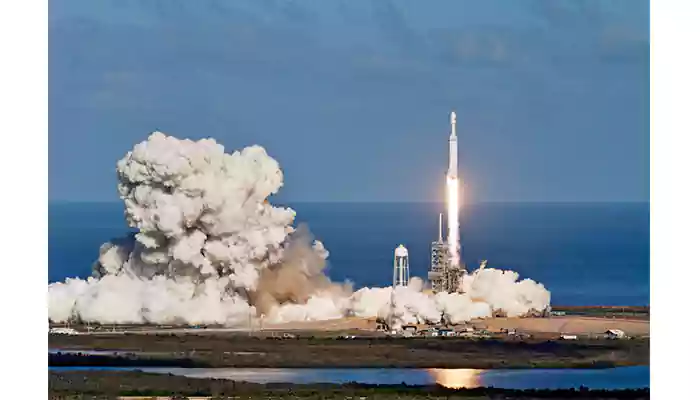
- Commercial Spaceflight:One distinguishing aspect of Space Exploration 2.0 is the growth of commercial spaceflight. Reusable rockets developed by private companies like SpaceX, Blue Origin, and Virgin Galactic are revolutionising the space industry by establishing the benchmark for space travel and easing access to space for satellite deployment, scientific research, and other uses. Commercial spaceflight has made space travel more accessible, which has opened up new possibilities for collaboration and study.
- Lunar Missions and Beyond:Following the footsteps of Apollo missions, the emphasis has returned to the moon. NASA's Artemis programme aims to return humans to the moon by 2024, with plans for in-depth lunar exploration and the building of a lunar outpost. Space agencies and commercial organisations are shifting their focus away from the moon and towards Mars and other sites in the solar system with aspirations for future human-controlled missions and habitation.
- Collaboration across borders: Space exploration has always been an international endeavour. International cooperation is essential to Space Exploration 2.0. The importance of international collaboration gets demonstrated through partnerships like the International Space Station (ISS), where several nations collaborate to conduct research and enhance space technology. It enhances the pool of collective resources, knowledge, and finance while establishing a unified goal for astronomical exploration.
- Exoplanet investigation: While Space Exploration 2.0 broadens the scope to encompass the discovery and exoplanet research—planets outside our solar system—the focus has historically been on our solar system. Powerful telescopes and spacecraft have enabled researchers to find and study distant exoplanets to find indications of habitability and the possibility of alien life. Our interest remains stoked by the search for Earth-like planets outside our solar system, which has potentially significant ramifications for how we see the cosmos.
- Technological advancement:Advancements in several disciplines, including rocket propulsion, materials science, robotics, and artificial intelligence, are still being driven by space exploration 2.0. These advancements aid space missions and have significant uses on Earth, including transportation, healthcare, environmental sustainability and communication.